

Camera or Cop? What a School Bus Ticket Really Means for Long Island Drivers
Camera or Cop? What a School Bus Ticket Really Means for Long Island Drivers

Every September, the buses come back. You are heading down Deer Park Avenue or waiting at a light in Bay Shore, half-awake with your coffee, and there it is in front of you: the yellow bus, the arm swinging out, the red lights flashing. Most drivers stop without thinking. Some do not, and a few weeks later a ticket shows up in the mail that they never saw a police officer write.
If that has happened to you, or you are worried it might, you are not alone. Passing a stopped school bus is one of the most misunderstood violations on Long Island, and the confusion costs people real money and, in some cases, real points on their license.
So let me walk you through it in plain language.
First, the rule everyone forgets in September
In New York, when a school bus stops and puts its red lights on, you have to stop. That is true whether the bus is in front of you or coming toward you on the other side of the road. It does not matter if you are on a two-lane street in Lindenhurst or a wider road in Islip. If it is an undivided road, both directions stop.
The yellow lights are your warning. They mean the bus is about to stop, so start slowing down. The red lights mean children are getting on or off, and you stay put until the lights go off and the bus starts moving again. When in doubt, wait. A few extra seconds is nothing compared to what is at stake.
And the stakes are not small. Across New York, an estimated fifty thousand vehicles illegally pass a stopped school bus every single school day. Children between four and eight years old make up less than a third of bus riders, but they account for the majority of school bus related fatalities. This is the one violation where the fine is genuinely not the point.
Now, the part that trips people up: there are two very different tickets
When people say "I got a school bus ticket," they could be talking about one of two completely different things, and the difference matters enormously.
The first kind comes from a camera. Suffolk County runs a stop-arm camera program across more than sixty school districts. Cameras mounted on the buses photograph vehicles that go past while the red lights are flashing, and the ticket gets mailed to whoever owns the car.
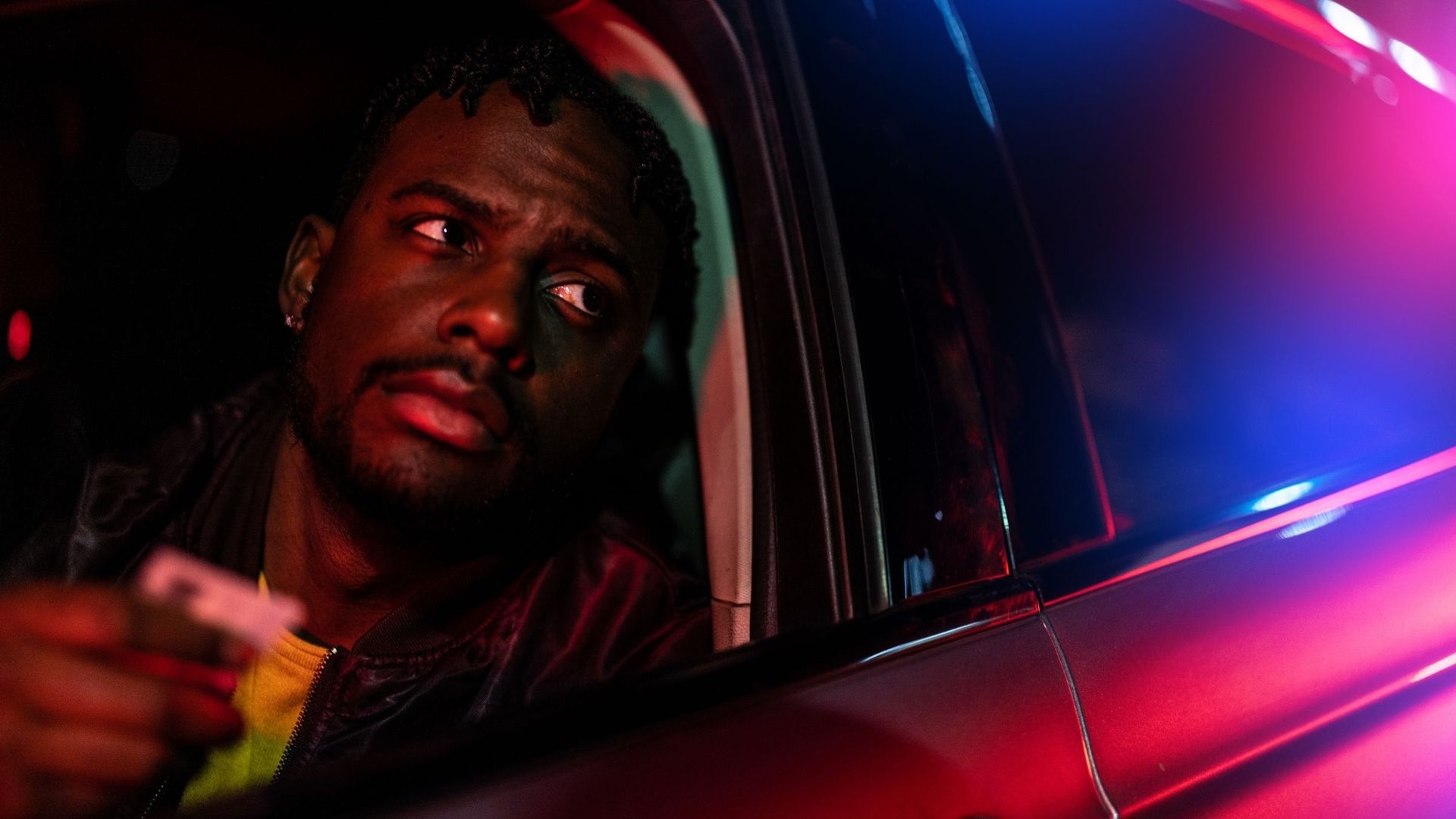
The second kind comes from a police officer who sees you do it and pulls you over.
They sound like the same offense. They are treated very differently under the law.
What a camera ticket actually costs
A school bus stop-arm camera ticket is a civil violation. It is tied to the vehicle, not to you as a driver, so it goes to the registered owner regardless of who was behind the wheel. The fines run in the range of two hundred fifty dollars for a first offense, two hundred seventy-five for a second within eighteen months, and three hundred for a third.
Here is the part that surprises people, and it is good news: a camera ticket like this does not put points on your license. It is handled more like a parking or red light camera ticket than a moving violation.
That does not mean you should ignore it. It still has to be dealt with, and if it was not actually you driving, or the circumstances were not what the camera suggests, that is worth a conversation. But it is a very different animal from the second kind.
What a ticket from a police officer costs
If a police officer tickets you for passing a stopped school bus, you are looking at a moving violation, and the consequences changed this year. As of February 16, 2026, passing a stopped school bus carries eight points on your license. It used to be five. That is a significant jump.
On top of the points, a first offense can bring a fine in the range of two hundred fifty to four hundred dollars, and the law even allows for the possibility of jail time. Eight points on its own is a serious dent in your record, and it does not take many more to put your license at risk.
Why the points matter more than the fine
I say this in almost every conversation I have about traffic tickets, because it is the thing people underestimate. The fine is the cheapest part. Points are what follow you. They can push your insurance premium up for years, and enough of them can cost you the
license you need to get to work. On Long Island, losing your license is not an inconvenience. It is a threat to your paycheck.
So when a ticket for a stopped school bus is written by an officer, treating it as "just a ticket" and paying it can be one of the more expensive shortcuts you take. Paying it is the same as pleading guilty.
What to do if you get one
Look closely at the ticket first. Is it a civil notice that came in the mail from a camera program, or a moving violation an officer handed you? That single distinction tells you most of what you need to know about how serious it is.
Either way, do not just pay it on autopilot. Take a picture of it, note the date you have to respond by, and call me before you do anything. It costs nothing to find out where you stand, and I would much rather talk to you before a deadline passes than after.
If something happens, the number is (631) 482-7808. Call anytime, day or night. Finally, a Fella You Can Count On.
Attorney Advertising. This content is for informational purposes only and does not constitute legal advice. Call for a free consultation to discuss your specific situation.