

It's Deer Season on Long Island Roads. Here's What Every Driver Should Know.
It's Deer Season on Long Island Roads. Here's What Every Driver Should Know.
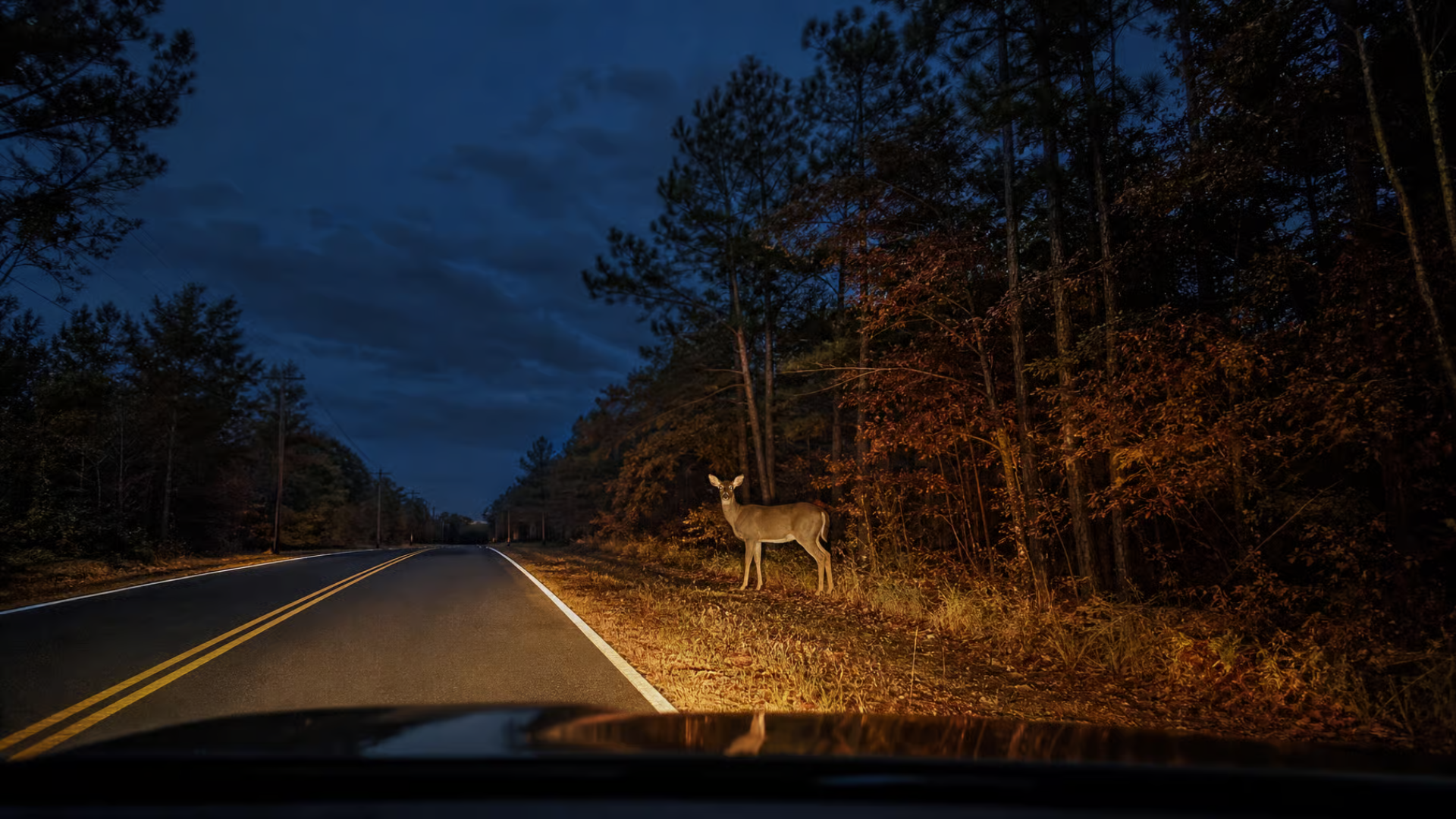
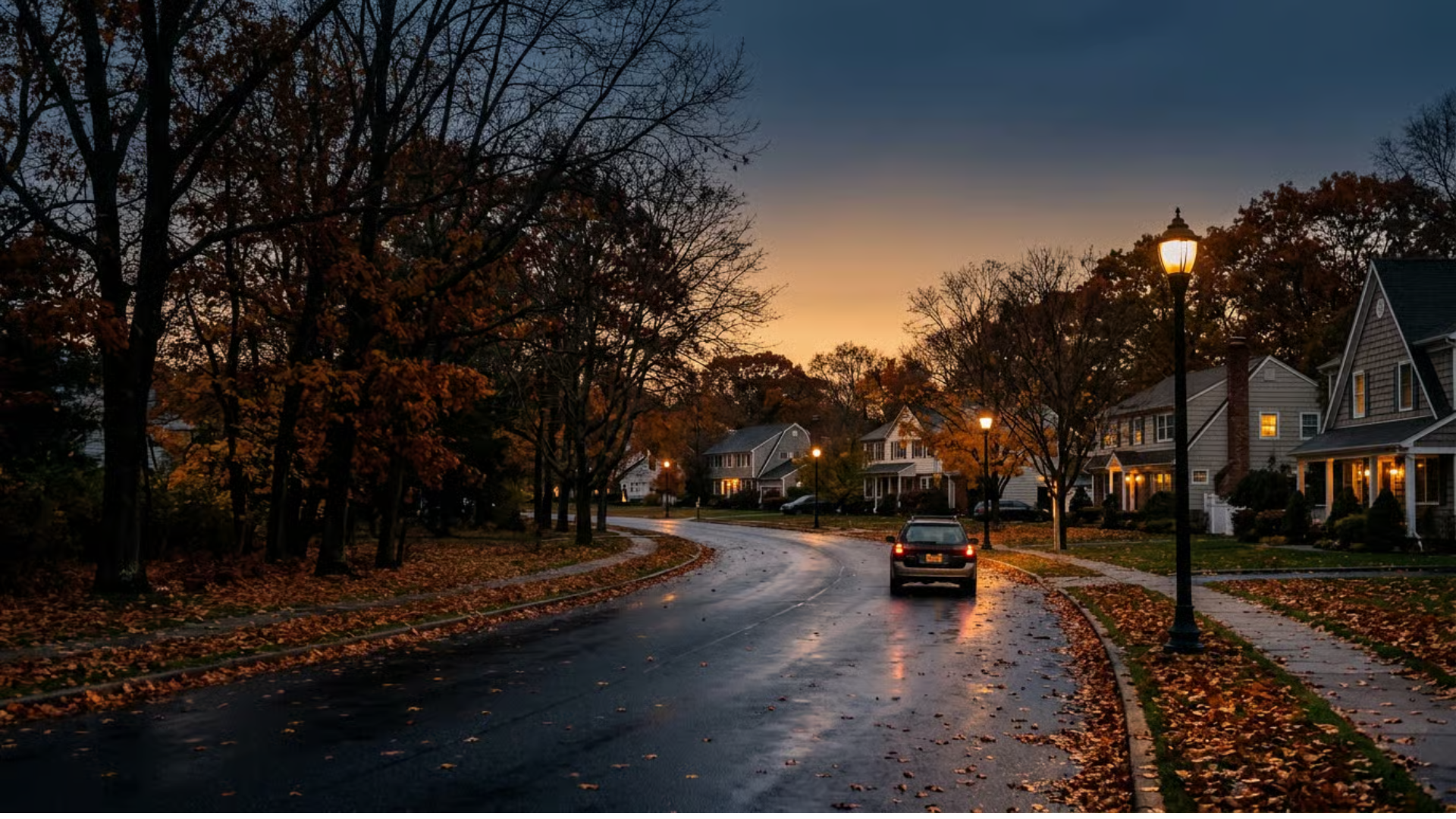
It is just past dusk and you are driving a familiar road through the wooded part of Suffolk County, maybe out near Manorville or through the Pine Barrens on your way home. Your headlights catch something at the edge of the trees. By the time your brain says deer, it is already in the road. What you do in the next half second matters more than almost anything else you will do behind the wheel all year.
Fall is deer season, and not just for hunters. On the roads, it is the most dangerous stretch of the year for deer collisions, and Long Island drivers get caught out by it every single autumn. Here is what actually happens, and how to come through it in one piece.
Why fall is the dangerous season
Two things line up in the fall to make deer collisions spike. The first is the deer themselves. Autumn is their mating season, which means they are moving more, moving farther, and paying far less attention to roads than usual. The second is us. The days get shorter, so more of our driving happens at dawn and dusk, which is exactly when deer are most active.
The numbers tell the story. New York sees roughly sixty-five thousand deer-related vehicle collisions in a typical year, and they concentrate in October, November, and December. November is the single worst month of them all. So if it feels like you are suddenly seeing more deer on the shoulder in the fall, you are not imagining it.
The split-second rule that can save your life: do not swerve
This is the most important thing in this entire article, so I will say it plainly. If a deer steps into the road and you cannot stop in time, do not swerve.
I know that goes against every instinct. But swerving is how a deer collision turns into something far worse. When you jerk the wheel to avoid an animal, you can cross into oncoming traffic and hit another car head-on, or leave the road and hit a tree or a pole. Those crashes are almost always more serious than hitting the deer would have been. The safer move is to brake hard, stay in your lane, keep both hands on the wheel, and keep control of the car. A damaged bumper is a much better outcome than a head-on collision.
Where you see one, expect another
Deer travel in groups. If one crosses in front of you, slow down and assume a second and a third are right behind it, because they very often are. When you are on a dark, wooded road with no oncoming traffic, use your high beams so you can pick them up sooner at the edges. And take the yellow deer crossing signs seriously. They are posted where collisions actually happen, not at random.
Sometimes it is not the deer that hurts you
Here is where this becomes more than a safety tip. A lot of the injuries I see from this time of year do not come from the deer at all.
They come from what happens around it. A driver swerves to miss a deer and crosses into your lane. A car ahead of you slams on the brakes for an animal and you get rear-ended, or the driver behind you does. One deer in the road can set off a chain of events involving several cars and several people.
When another driver's reaction causes a crash that hurts you, that is a very different situation from simply hitting a deer on your own, and you may well have a claim. The deer did not cause your injury. Another person's split-second decision did.
What to do after a deer-related crash
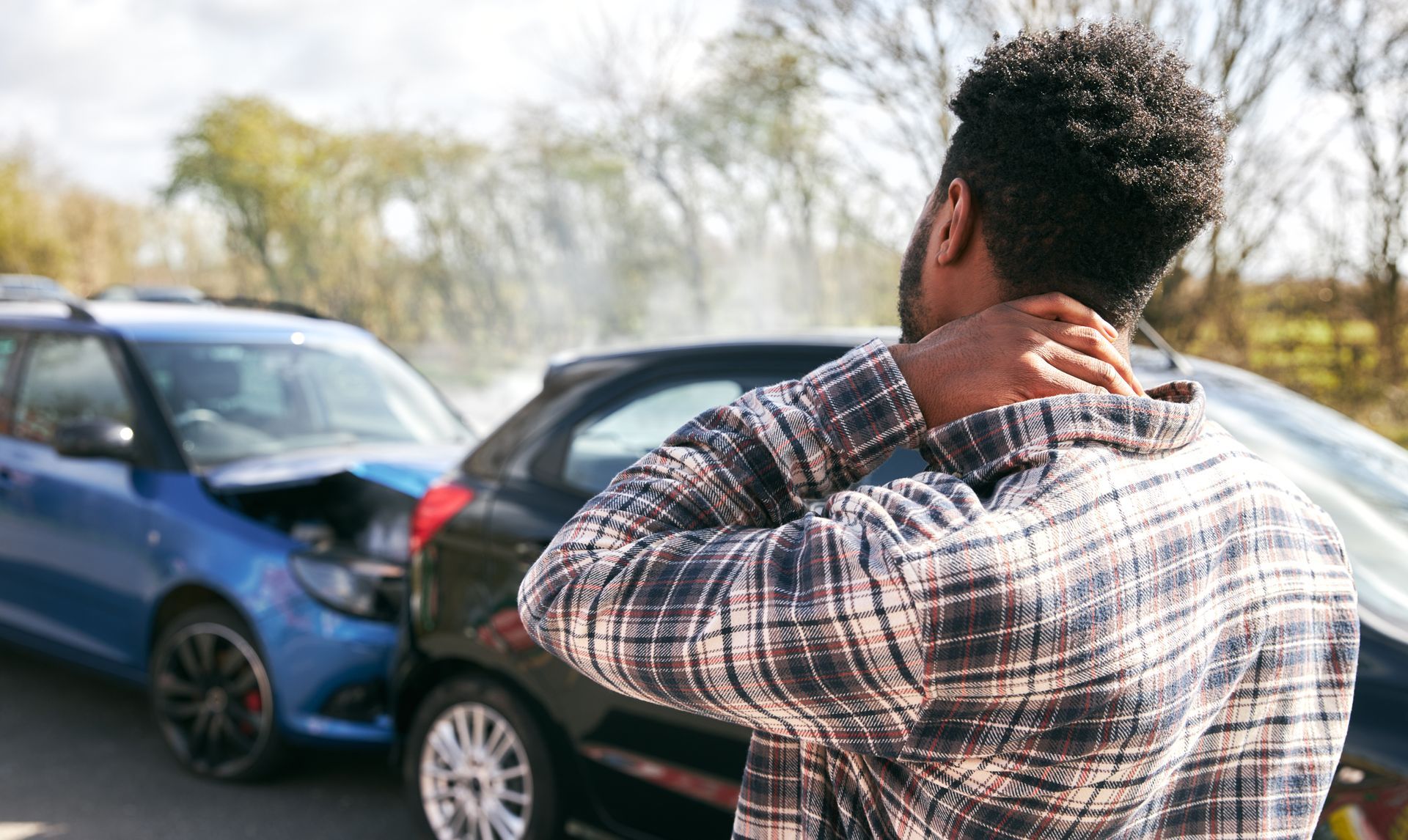
The steps are the same as any crash. Get yourself and your passengers to safety and put your hazards on. Call the police so there is an official report, which matters later. Take pictures of everything, the road, the damage, the lighting, and how dark it was. Then get checked out by a doctor even if you feel fine, because the jolt of a sudden collision can hide injuries to your neck and back that show up a day or two afterward.
A quick word on insurance
If you hit a deer directly, that is usually handled under the comprehensive part of your auto policy, the same coverage that handles things like theft or a cracked windshield. But if the crash involved another vehicle, whether someone swerved into you or a chain reaction started with a deer, other coverage and other questions come into play, and the insurance company's first phone call is not always working in your favor. Before you give a recorded statement or accept anything, talk to me. It costs nothing to find out where you actually stand.
Deer are part of living out here. Getting hurt because of one does not have to be. Drive a little slower at dusk this fall, keep your eyes at the edges of the road, and remember the one rule that matters most: do not swerve.
The number is (631) 482-7808, available day or night. Finally, a Fella You Can Count On.
Attorney Advertising. This content is for informational purposes only and does not constitute legal advice. Call for a free consultation to discuss your specific situation.